Public Private Partnerships and the Execution of the Nations First Responders Broadband Network for Public Safety

In highlighting the FCC’s recent announcement, dated July 31st, I would like to touch on the topic within Section 25 where it covers a solid foundation of funding sources to help justify the issuance of a STA. This is only the tip of the ice-berg. I would not advise trying to go it alone. The complexity of a multi-million/billion dollar program would be at stake. 
To help justify such a large and complex broadband solution, that will inherently be able to collect revenue, administer services and maintain long-term operations, it is important that each State understand its obligations of developing a solid framework of regulatory capabilities in administering its Public Private Partnership. This goes way beyond the governance model of executing a project timeline or instituting technical design standards. This regulatory solution is to construct a solid system of financial modeling observance that will help with mitigation and its administration of contractual alliances throughout the partnership framework. This is a highly complex topic to which I will not cover here in great detail, but to illustrate I have started with the basics of the contractual models to make this affective. 
  • Special Purpose Vehicle construct (Private third party entity, Project or Program profile)
  • Political support beyond pilot or trial stage
  • Procurement process and complexity of valuation
  • Risk transfer sublets to investors, service providers, etc..
  • Availability of appropriate funding
    • Short or long term
    • Equity position, shareholder agreements, non-recourse debt
  • Market focus and competition
  • Political will
To further illustrate I have illustrated below some common contractual frameworks that most are familiar with. The frameworks are nothing new and can be modified to fit the initiative, but they do provide some basic insight into the types of Public Private Partnership contracting frameworks. The most likely candidates for the Public Safety Broadband Network deployments will be the highlighted top two.  What’s most important , and I can not stress this enough, is the alignment of the business model and the requirements of the stakeholders as laid out in the contractual framework for execution. 
  • Build-Own-Operate (BOO): The private investment partners will provide financing and will construct, own and operate the broadband network as well as provisioned services in perpetuity. The public constraints are stated in the original agreement and through on-going regulatory obligations. Typically we could also see a design element here but most of the design characteristics would have already been completed by the FirstNet Board prior to a States rollout. 
  • Operating License: A private operator receives a license or rights to build and operate a public service, usually for a specified term. Similar to BBO arrangement. This has been the most widely used format within the telecommunications projects but mainly overseas. Success has been intermittent mainly due to its implementation through commercial carriers. What really lacks here is that the solution would utilize existing constructs of service provisioning and hardening requirements per the carriers business objectives, which means the State would risk outages due to catastrophic events. 
These are other variants of Public Private Partnership frameworks, but these would not be advised.
  • Provision (e.g., Specific customer services or operation & maintenance) contract: A private operator, under contract, operates a publicly-owned asset for a specified term. Ownership of the asset remains with the public entity. With this model the State, and FirstNet, would lose the revenue base of operations which would be needed for the “self funding” capability to administer long-term operations and maintenance. 
  • Management contract: A private entity contracts to management a Government owned entity and manages the marketing and provision of a service.  This format lacks complexity and would not be cost effective in how it collects revenue, shares risk, investor adherence, nor the introduction of approved and installed assets which may already exist.  
  • Lease and operate contract: A private operator contracts to lease and assume all management and operation of State owned facility and associated broadband services, and may invest further in developing the service and provide the commercial service for a fixed term. This model basically expands the commercial industry model and thus may not be able to fulfill requirements of staying “Public Safety” in its service approach. Such a format would open the door for commercialization of services which could be detrimental to the execution of public safety solutions. 
  • Design-Build-Finance-Operate (DBFO): The private sector designs, finances and constructs a new facility under a long-term lease, and operates the facility during the term of the lease. The private partner transfers the new facility to the public sector at the end of the lease term. The real obstruction to this format is the leasing arrangement and the fact of transfer to a government entity. This broadband solution is best placed and run from the P3 concept indefinitely. 
  • Build-Operate-Transfer (BOT): A private entity receives a franchise to finance, design, build and operate a facility (and to charge user fees) for a specified period, after which ownership is transferred back to the public sector. This has been used in telecommunications service contracts. Same as bullet above. The broadband solution will have long-term leasing arrangements that will preclude it from passing ownership back tot a government entity due to revenue collection model. This is not precluded form government takeover in the event of financial difficulties or failure of the business model. 
  • Buy-Build-Operate (BBO): Transfer of a public asset to a private or quasi-public entity usually under contract that the assets are to be upgraded and operated for a specified period of time. Public control is exercised through the contract at the time of transfer.
  • Finance Only: A private entity, usually a financial services company, funds a project directly or uses various mechanisms such as a long-term lease or bond issue.Design
  • Build (DB) or “Turnkey” contract: The private sector designs and builds infrastructure to meet public sector performance specifications, often for a fixed price, so the risk of cost overruns is transferred to the private sector. Once again transference is the issue. 
If you need some help just let me know.
Just some guy and a blog….
Who’s buying Nokia Siemens Networks?

I read a recent article to which labor statistics show that over 165,000 jobs were lost in the telecom industry…thats more than 15% within the last year. The consolidation and convergence towards IP is having a deeper impact now because the process is speeding up given our current market conditions. It may be a perfect storm scenario here. 

Much like GD bought IP Wireless, which was a brilliant move by the way, and the new market of the Public Safety now moving into its next generation of wireless, that being LTE, it makes for a perfect buying position for a major Defense Contractor to buy, at least, the LTE product line. You would think that if we are building the Nations First Responder Network, a private network, that it would be viewed as a National Security Asset, thus requires the protections as we have in all our secure government networking solutions…those solutions are run by these big contractors….not the OEMs or carriers. After all there is a reason for the term “buy America” when it comes to the Government and its not all about just employing more Americans….its about the safety of knowing — intimately — your assets and securing them from intrusion. Such a solution is only achievable, or I should best achievable, if the general contractor actually buys the asset. In the end, these product lines are a small piece of what someone like Raytheon does everyday. Last year Raytheon did 25 Billion in government work alone. 

Just some guy and a blog….

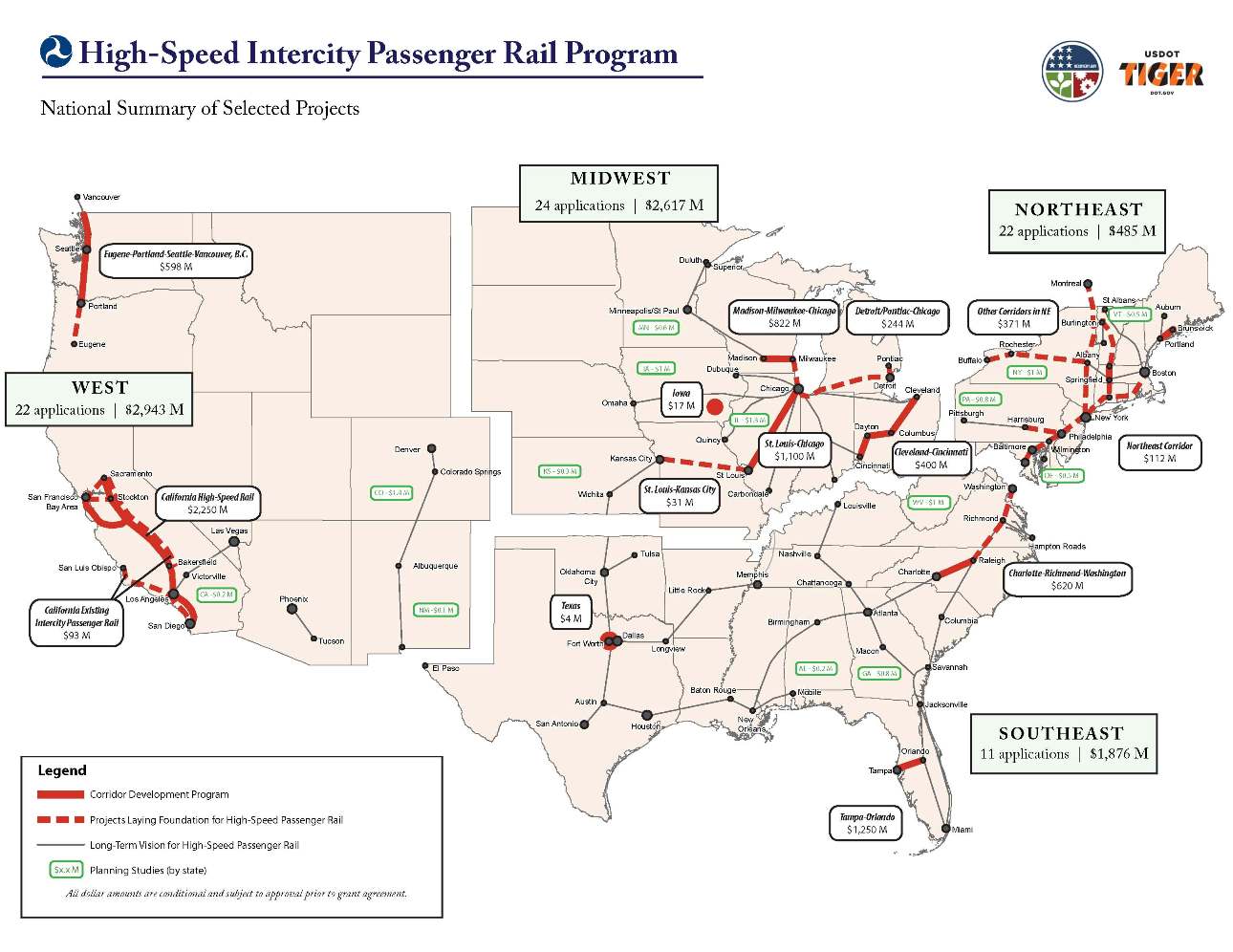
High Speed Rail needs LTE Broadband too! Another key player in the Nations First Responder Broadband Network and State Initiated Public Private Partnerships.

Did you realize that the California High Speed Rail program, which was just voted in by the State Constituents, is made up of 10 segments? And the last I heard…when I was deeply involved…it was running in the estimates of 90-100 Billion dollars fully completed (forecasted 2009).
Did you also realize that the GSM (Global System for Mobile Communications) standard was a basis for on-board high-speed rail communications…better known as GSM-R? The “R” stands for Rail. There is an entire multi-billion dollar industry behind just this solution. I bet you may also know that the standards body for the High Speed Rail Communications (an APTA sub-committee) is adopting an LTE-R as its standard moving forward. That means they will actually need to get access to the LTE broadband technologies. This would put them in the same boat as the Utilities, Healthcare, Agriculture and DOTs (other than rail) in requiring access to the spectrum… that means they will have to go private or commercial to get it. They could fight for the spectrum — but that would be a long and strung out battle. Plus they would still need to convince the OEM manufacturers to produce the gear to talk on any frequencies not included in the current spectrum roadmap.
On a typical DB (design build) job for the rail industry; communications and IT solutions run at around 10-15% of the total capital budget allocated for the build. It also runs at around 10% of the CAPEX (pertaining to the communication and IT subset) that would be allocated towards operating the technical platforms on an annual basis. For the California High Speed Rail Program that would mean that (and I will use a conservative 10%) $9 Billion would be spent throughout the entire build phase with another $900 Million in annual operating costs. Someone check my math please….. I hold a PhD in Organizational Management not Math. That seems like a pretty good size market to me. The only real issue, much like other industries that are in the same size and scope, they take a long time to get moving. So don’t charge out there and try to build your business on it expecting returns within a few months…it will be awhile.
Did you also know that a typical Transit Agency (one that would operate such a rail program) typically has its own Police Force? It may be just me, but wouldn’t that constitute them as a First Responder and Public Safety Broadband player as well? Also you must realize that just in the High Speed Rail market alone, not including Heavy Rail, Mass Transit Subways and Telecommuter Rail, there are more than 53 planned routes for high speed service throughout the Untied States.
Just some guy and a blog….

Transportation and their need for the Public Safety Broadband Network

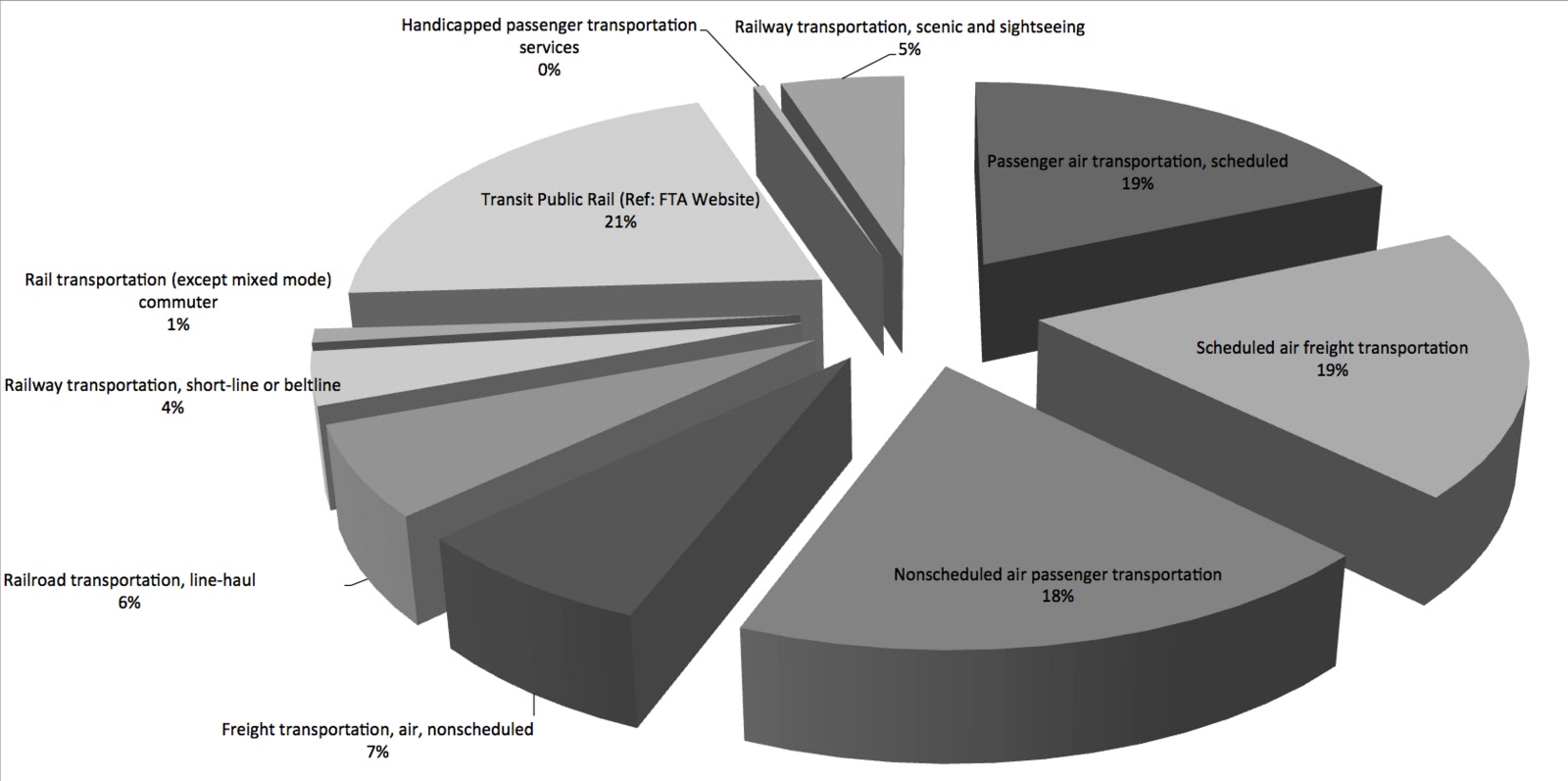
Another main industry that could drastically help, and use, the Public Safety Broadband Network is the Transportation Industry. Below is a chart I put together that lays out the industry in whole. Note that it is a lot more than just Highways or State DOTs, i.e. you have mass transit, highways, intermodal ports etc.

Within the Transit industry you have established First Responders throughout. This industry as well will require vast amounts of communications for responding to emergency, i.e. train wrecks, subway assaults, highway pileups, just to name a few.

The interesting point is that the Transportation Industry has a whole host of potential Public Private Partnership capabilities as well. It would be ill advised not to include them as well when needing to fund the Nations First Responder Network.

Just some guy and a blog….

Background Market Research on the Utilities and why it is wise to be a part of the Public Safety Broadband

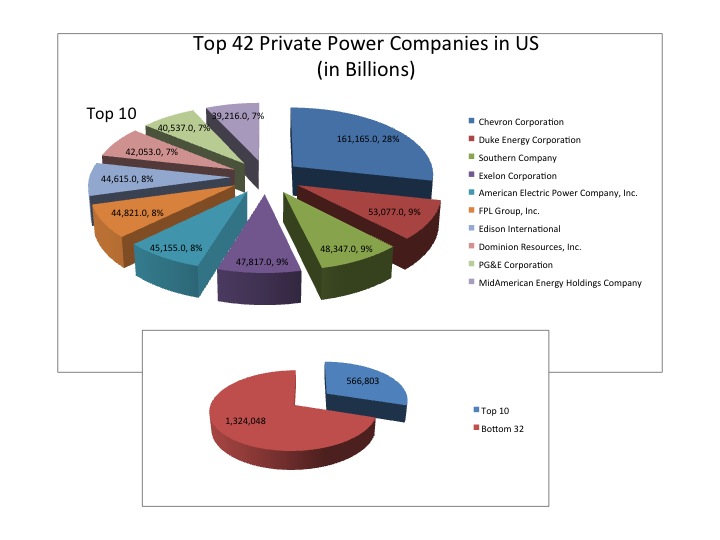
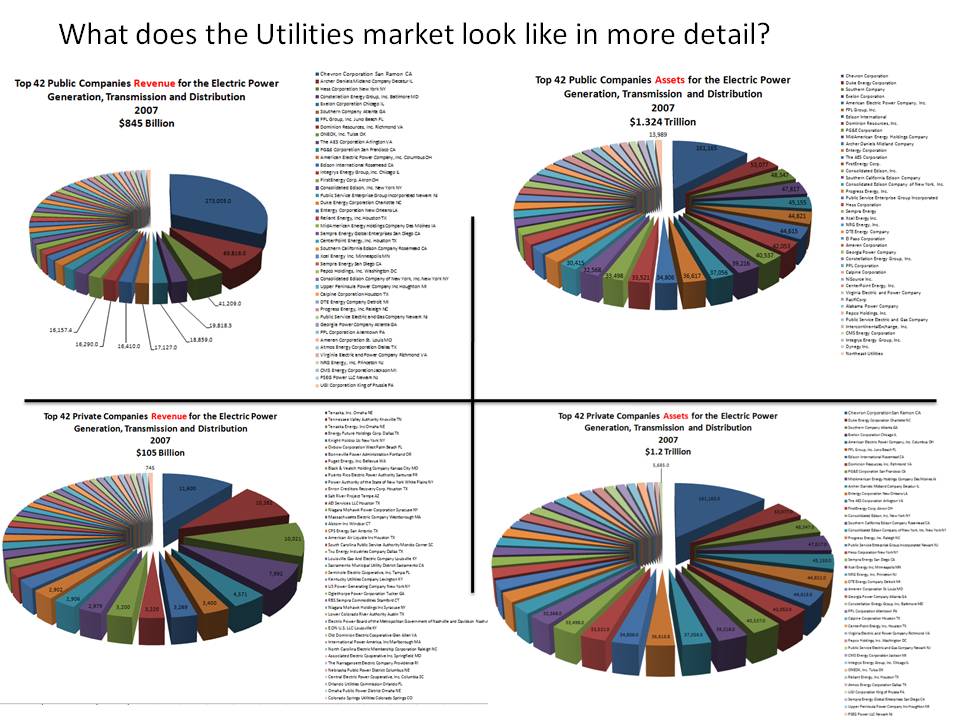
Another interesting area that I have researched is the Utilities industry. I have gathered a lot of data on this industry and clearly see its fit in the Public Safety Broadband play. They have an abundance of cash and assets (as illustrated below). These numbers are a little bit dated (two years), but it gives you a great idea of what one of the potential players could look like when it comes to Public Private Partnerships.
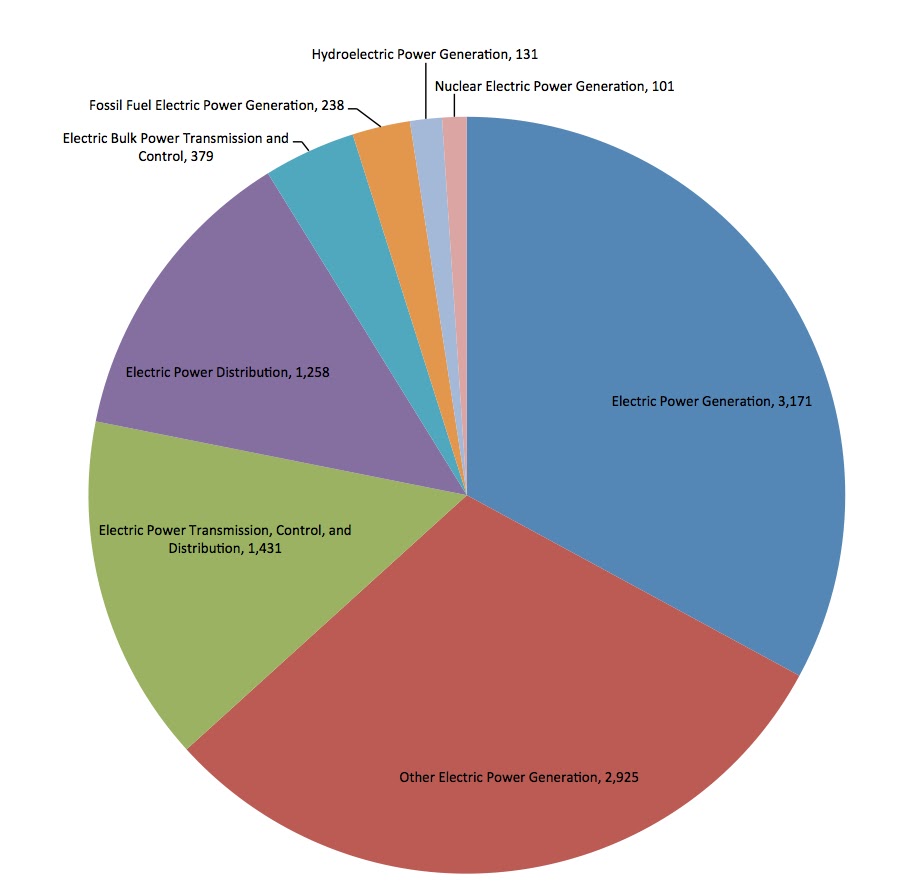
Here is a more specific breakdown on the Utilities industry in whole.

Just some guy and a blog….

Healthcare Industry and its Telecommunication Opportunities for of the Public Safety Broadband Network

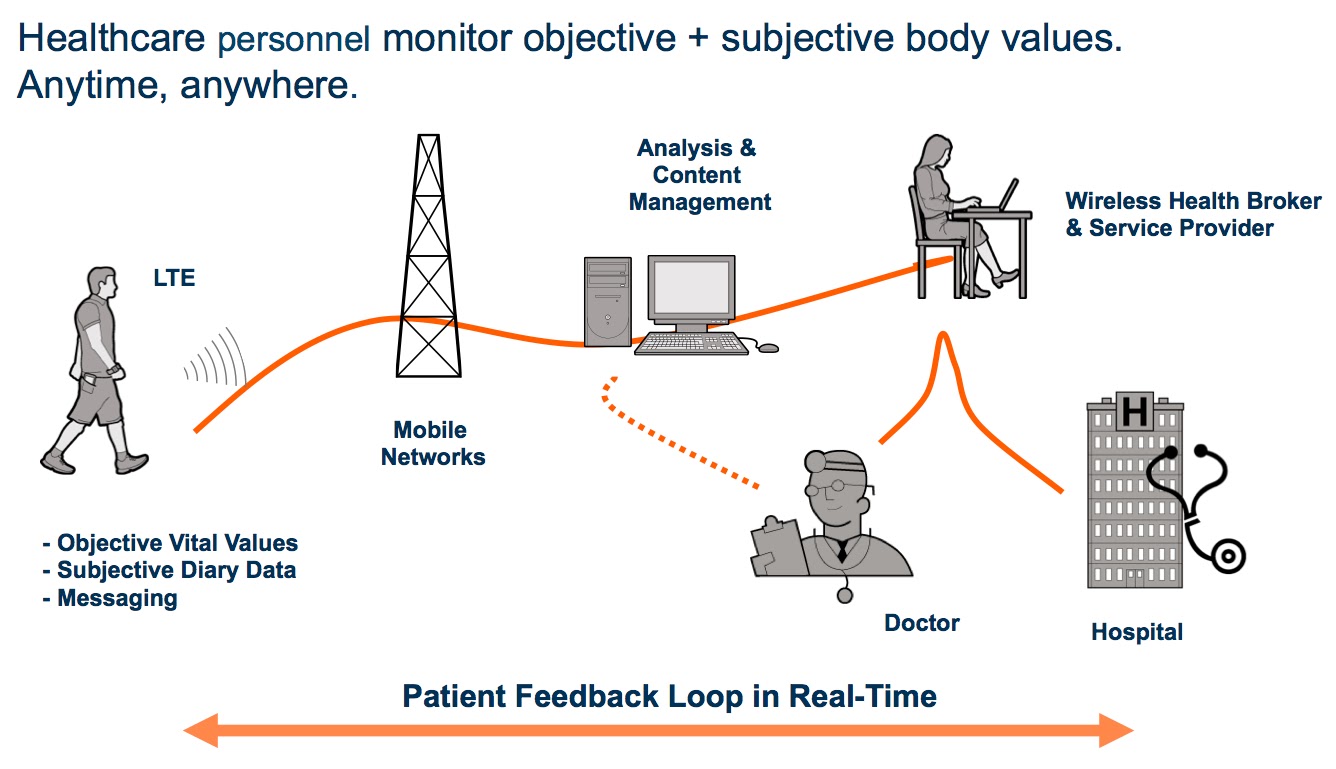
As part of my specialization I research all the major vertical market segments and the impact that telecommunications has on them. Some of my work is basically analyzing the markets for opportunities of which telecommunications can advance even further, especially as they relate to the rollout of the Public Safety Broadband Network. Hospitals are closely tied to the Public Safety arena…after all without Ambulances or EMT type personnel then who is better qualified.
Did you know there that in the US healthcare sector includes more than 820,000 hospitals, doctor offices, emergency care units, nursing homes, and social services providers, with combined annual revenue of over $1 trillion. Major companies include Kaiser Permanente, HCA, and Ascension Health. The sector is highly fragmented: the top 50 organizations hold just 15 percent of the market. Hospitals are the least fragmented industry: the top 50 hospitals account for 30 percent of total hospital revenue.
The industry includes about 6,000 general hospitals; 20,000 nursing homes; 15,000 diagnostic labs; 30,000 outpatient clinics; 120,000 dentist offices; 200,000 doctor offices; 75,000 day care facilities; and 50,000 family and social services providers. Of the 6,000 US hospitals, around 75 percent are for-profit. Most doctor offices, nursing homes, outpatient and urgent care centers, and day care facilities are run as for-profit enterprises.
These are a lot of internal state entities that would require access to the Nations Public Safety Broadband Network being laid out by the NTIA. I hope they haven’t forgotten about this market.
Just some guy and a blog…

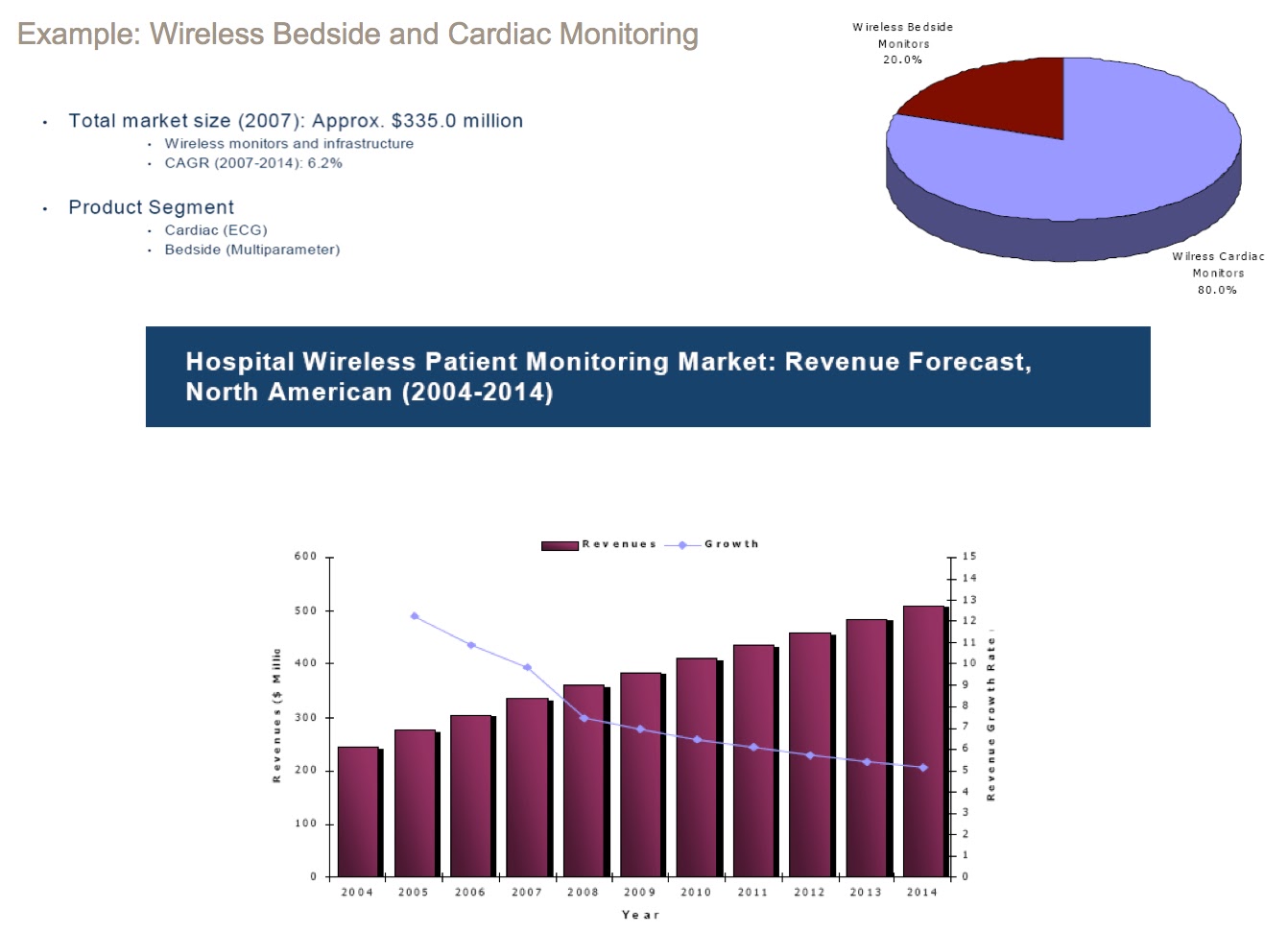
Just as an example; here is the breakdown of the Wireless Patient Tracking solutions for this market…

FCC Rural Broadband Coverage using the Public Safety Broadband Network

I wonder how long it will take for the FCC to realize that the rural broadband initiative can be achieved through its plans for the Public Safety Broadband Network (PSBN).
Although the initial deployments of the PSBN will be for Public Safety specific uses; it won’t be long before the abundance of bandwidth and low usage statistics start to become evident during its initial tenure. This may open the door for expansion of the FCC Broadband initiative to include private wireless as a method of touching the rural Americans; not just the wireline as is the case today. This could put a whole new spin on the FCC’s Connect America Fund
As parts of the PSBN start to come online, and solidify in its daily operations, the FCC and the NTIA could start to harvest the under-utilization of the PSBN during non-emergency timeframes. A key way to develop this usage could be through a mechanism of RFPs. In short, the FCC (or a State entity) could initiate RFPs that the carriers would bid-on in order to get access to the rural customers within the wireless/wireline footprint of the PSBN. This would generate a win-win-win scenario whereas everyone would get what they want: the carriers get access to the customers without having to build; the rural Americans get broadband access; the Public Safety gets better utilization and funding for its broadband deployments; and the State and Federal Government resolve a standing issue of broadband to all Americans, plus a strong infrastructure for Public Safety. 
For a carriers point of view though, it will be imperative to know how such opportunities would be administered, i.e. would the State or Federal Government let the RFP and/or would they be obligated to buy access to the rural customers, or would they just compete to fill a void of service offerings to the rural America? The opportunities are abundant, but from my perspective, it would be wise for the State and the Federal Government to utilize their Public Private Partnership arrangement, associated with funding the PSBN, to enforce revenue sharing, or a “price for access” model; much like a carrier would do to them. In essence, instead of the carrier selling access to the State, the State would sell access to the carrier; then the carrier would sell broadband service to the rural customers.
Just some guy and a blog…

The Telecommunications Carrier Model and the Public Safety Broadband Public Private Partnerships

“To the optimist, the glass is half full. To the pessimist, the 
glass is half empty. To the engineer, the glass is twice as big 
as it needs to be.” (Unknown)

Its been my observation recently that the technical and tactical drive of the initial Public Safety Broadband Network plans are clouding the efforts for a State to understand the impacts of not pursuing a foundation for its needed Public Private Partnership.

There is plenty of deployment, interoperability and integration issues being addressed by the vendors and the engineers — but it may be an observation worth bringing-up – that is the lack of development around a sound business model to build and sustain that technical platform. After all, it’s easy to just pass over the topic of paying for the network when the entire basis of perception is on a non-revenue and private platform. Plus, it doesn’t help to propose grants and tax dollars without any real consensus on how the money should be spent – case in point would be the DOE stimulus money for SMART Grid; money put into the market too quickly without administering a real business model beforehand. Nor does it help that the market conditions kill our entrepreneurial spirit of creativity by forcing us into the “reliance” on the government to come up with the plans and funding to get things started. In reality without that foundation of a solid Public Private Partnership (P3) business case; some States may find themselves way out in front of the pack only to have to turn-around and come back because the industry made a turn. What is the solution?
A solution for this situation is to simultaneously start to pursue a solid foundation of a business model that works for your State in coordination with the Federal Board, or FirstNet. If it will cost you roughly $750 Million to build 3000 towers within your State ($250k X 3000); then you should script a business model that secures the benefits of the LTE platform, much the same as a carrier does. But you must design the solution that expands upon the notion of building a private network of networks. This developed business model needs to incorporate all aspects of revenue generation; revenue from handsets, revenue from leasing options, revenue from investors, and funds from the State and Federal budgets. All of these elements are tied to together so it is essential that equal participation be the norm. When you force the hand of one element over the means of the others, all you are doing is imposing the weaker link methodology – that is the network, and the business case, will only be as good as its weakest link. In this case it may be over-engineered to a point that it hides the benefits of a “self funding” platform.
So how do you get started? You need to start having knowledgeable discussion around the P3 concept and how all the players (State and Federal entities) will take part; how the technology can be exploited; what investment scenarios can be made; and what are the long-term objectives. It will be crucial to bridge the technical adaptation of the LTE platform with a solid business case objective wrapped within a P3 vehicle. My suggestion; there are only a few of us that have the technical background and the P3 expertise, I would start employing those resources now that will help mold your plans for the future. Once the market turns around, it will be too late, you will be forced to play with the rest of the herd or forced to follow behind.
Just some guy and a blog….

Why is it so important that the Utilities and all State and Federal agencies get on-board with Public Safety? It’s all about surfing the wave!

There has been a lot of traffic in regards to the Public Safety Broadband Network and its impending rollout throughout the United States. But there seems to be a lot of confusion as to why the Utilities, Transportation, and all State Agencies, must get on-board with the solution. It’s a complex question to answer, but using the Utilities as an example, I will try to convey a high level theory.
The primary reason is of course cost, Money. Money is the end of the line for all our efforts. But even eliminating the money issue you can see that there are three additional primary reasons: market forces at play; the domination of wireless commercial telecommunication advances; and the definitive fight against time.  I say, “wireless telecommunication” because the predominate talk today is around the complexities to install the wireless communications fabric the will run the entire Public Safety solution – or LTE.
The market surrounding telecommunications, in whole, is one of divergence and consolidation. As the carriers’ move further away from their dependence on the “old” network infrastructures of 2G and 3G, and more towards an all IP based architecture of 4G, it puts a strain on the Original Equipment Manufacturers (OEMs). It forces the OEMs to rethink their product lines to accommodate the 100 Million users each carrier services, in short, they have to downsize and eliminate the old and develop the new. As the carriers move into the IP fabric of more wireless dominance, so does the need for expanded and costly infrastructure and the pressure of the OEMs to design and develop products that will operate on it — in this case LTE.
With that said now picture a huge wave pool. The carrier creates the wave and those that rely on what the carrier sells, i.e. OEM, contractors and users, will be forced to ride that wave. As it stands we are currently in a wave of LTE and wireless. There is no turning back on the where this wireless wave is going — and by the way this is no typical wave — it’s a tsunami. A tsunami that is having deep and lasting impacts on the entire world and we are years away from when the calming of the oceans start to happen. Those impacts will, and are, having a huge impact on the Utilities as case in point.
You see the Utilities are one of those entities that is riding this huge wave and, unfortunately, they committed to the wave way too soon and have put themselves in the bad position of sitting at the bottom of the wave as it builds to its highest point. Having been a surfer in my youth, I know the feeling of committing too soon only to have that bone-crushing, ten-footer, crash on top of you. Its not a lot of fun and can be downright scary at times. But you just let your body rock and roll under the waves like a rubber dummy and wait for the point in time to make a dash for the surface. Meanwhile, everyone else is sitting back, riding the wave, or laughing at you on shore.
This is not entirely the fault of the decision making capacity of the Utilities, after all the excitement of the SMART Grid market, and the influx of stimulus money, paid a political toll that only forced them to commit to their deployments and the technology of the time. In this case that technology selection was WiMax and 3G cellular.
WiMax is better known as the Betamax of wireless. Now there are those who steadfast with their claims about WiMax, and that it still has a role to play, but its just a matter of time when the wave takes over the OEM manufacturing process — and the users commitment — will force the technology out of the picture all together.
Along with that WiMax decision came with the commitment to cellular 3G mesh solutions to connect the fabric of the SMART Grid metering infrastructure. This too was not entirely the fault of the Utility alone. Their decision to go with a 3G wireless solution was the technology being sold by all the major carriers at that time. LTE wasn’t even a viable solution yet. But that wave built up fast to the point that the wireless carriers saw that they had no choice but to commit to the 4G LTE solutions that ultimately enveloped the commercial carrier world (actually ever commercial carrier in the world has committed to LTE). With that commitment to 4G LTE, so came the commercial carriers notice to the Utility players that the 3G solutions they just sold them will be end of life within the next 5-10 years. This is the break in the wave that allows the Utility to shoot for the surface.
Most of those SMART Metering deployments have, or are, just wrapping up, which means they are already considering the next upgrade to replace the SMART Meters with radio interface chip sets that will talk LTE. This is a hard cookie to swallow being that a typical Utility likes to put technology in that lasts for 20-30 years — minimum. But, if they don’t upgrade then it will cost even more later to maintain (being that the OEMs won’t want to maintain tooling for the old devices) and ultimately be forced to upgrade when the options are less prevalent.
Could this have been avoided? Is it a bad thing? So where to go from here? The choice is clear to me…the Utility must commit full throttle to the technology. By buying into the complex architecture of the SMART Grid solution, they bought into the technology curve as a business. There is no going back. After all, you can’t just rip out all your SMART Meters … can you? Realistically though, they too are here to stay. But the decision to commit to LTE raises another complex issue. If the Utility commits to 4G LTE as its eventual wireless solution for SMART Metering — they will need spectrum. Thus comes the Public Safety Broadband Network (PSBN). It’s the surfer on the surface grabbing you by the arm to pull you out of the water.
In order to build out the entire national infrastructure of LTE, LMR (integration), microwave, fiber, and control/datacenter elements for the PSBN, it will cost roughly 70-100 Billion dollars (installed assets). The Federal Government allocated 7 Billion total with 5 Billion from auctions yet to happen and the remaining 2 Billion available in grants. The grants will be allocated to each State for a max grant total of 135 Million per State (most likely matching funds as well). It may be just me, but there seems to be a problem Houston. If you tally that up you get, roughly, 6.7 Billion (almost 7 Billion) and if matching funds are instituted — you get roughly 13 Billion. I’m no mathematician, but that’s not even close to 70 or 100 Billion needed. As an example, AT&T services 100 Million subscribers that accommodate 96% of the population mass of the United States. It has installed assets of 107 Billion. I think that may cover Internationally as well… not sure…. couldn’t see the split in the international versus US operations in their 10K filings.  
Ultimately the answer is in the States ability to generate enough cash to build their portion of the national solution. That need opens the door to a Public Private Partnership that would allow State entities, and departments, like a Utility, to play a crucial part. The Utility needs the technology and the PSBN needs cash.
This relationship opens the door for some great benefits for the Utility. One obvious opportunity is the Utilities currently installed telecommunication infrastructure, which could be utilized for the PSBN to offset infrastructure costs. A more pressing opportunity is the added cost savings to a Utility by not having to run a capital program to install the wireless infrastructure themselves, which is what they would typically do…as was the case of the SMART Metering installs. In essence, the Utility can put the risk on the State Public Private Partnership to deliver its broadband access for its SMART Metering infrastructure, thus saving the cost of having to build it themselves, ultimately eliminating their capital program requirements all together. Plus, it will shore-up a fixed annual operational cost model, at a fraction of a capital program, to pay for the broadband service it needs.
There is one other area that the Utility could benefit from — that being the investment option associated with the Public Private Partnership itself. As with all the State entities that would require access to the broadband services, they could all become stakeholders of the private investment itself. In short, they could also invest, monetarily, into the State Public Private Partnership, further reducing its fiscal footprint associated with their broadband needs by recouping money through a shared revenue model. The long-term revenue generated from the annual costs associated with buying the service from the State PSBN Public Private Partnership.  
In the end, it’s quite important that all the viable State agencies, and entities, that require access to the broadband LTE service, be a player in the Public Safety Broadband Network rollout. Together they all bring something that is complimentary to the overall success of the program and that will ultimately allow the entire nation to ride some awesome waves of change. 
Just some guy and a blog….