FirstNet, FCC, Broadband — Why the Carriers are concerned with Title 2 and Net Neutrality.

Sorry for the absence, but I’ve had some family issues that need to be taken care of. Maybe writing again will take my mind off things. In a second I will be writing about the FCC, Net Neutrality and Title 2. First, I need to convey that my wife has been diagnosed with an aggressive form of breast cancer last week – Stage 2. She will undergo a double mastectomy the week after. You can imagine that with five kids this is of great concern to her and I. But, we have the great support of family, friends and the community. The reason I bring this up is not for a pity-party so I can get a job, but rather to bring to light the need for every woman to get checked out. My wife is just 43. Take the time and get an exam. It will be the best-spent hour of your life — now on with the show.
I’ve been hearing a lot about the Net Neutrality, Broadband for Public Safety, Title 2 and the fear of the commercial markets as people start to understand that this large ship needs to turn. We are finally starting to realize the correct course of building out to the rural areas. To those naysayers of the Title II and Net Neutrality allow me to explain why this is a good and bad thing for the commercial carriers.
When both sides of the political playing field are going to bat on issues they know nothing about, then whatever decision our politicians make will look like we are moving in all directions, thus, it’s easy to misunderstand what the true impacts of the new laws will bring. I can assure you that the President didn’t realize what he did when he did it, but the fact of the matter is, and I have written about this in the past, this was going to happen anyway. So lets look beyond the half-baked facial expressions of “I don’t know what I’m talking about” when the President made his speech on national television and come to realize that all we are seeing is the next major step in carrier consolidation and convergence within the broadband space. In actuality, the President and the FCC are just making it happen faster, even if they don’t understand what they are doing.
The only reason the carriers are putting up a stink about the new FCC rulings are because of the factions within those organizations are fighting for survival. The reality of the situation is actually better for the commercial carriers. Allow me to explain.
The carriers today cover more than 96% of the “metropolitan” areas — so they say – but they don’t cover the rural areas. Why? The lack of revenue to build out to those areas is why. Not enough farmers to justify the physical build-out. There are a great deal of factions within the carriers who are tied to the revenue created by owning and building the infrastructure. These players tend to be in the physical construction of the broadband deployments, so you can’t blame them for trying to defend their way of life.  The realism of the situation is that the carriers, utilizing the new decision by the FCC, can now get a comprehensive deployment throughout the rural areas without having to spend a dime – that’s why they have been selling off their tower assets. Naturally those construction organizations within the carriers would be out of work, unless they go M&A, and become a new capital construction firm to work on their own. It’s best for them to do this anyway because the overheads associated with the commercial carriers price them out of the market.

  • Is the FCCs decision all good for the commercial carriers though? Well not entirely. The commercial carriers have gotten use to being the only player in their markets and by opening the rural and municipal markets under Title II will mean that a LOT of small providers will come out of the woodwork.
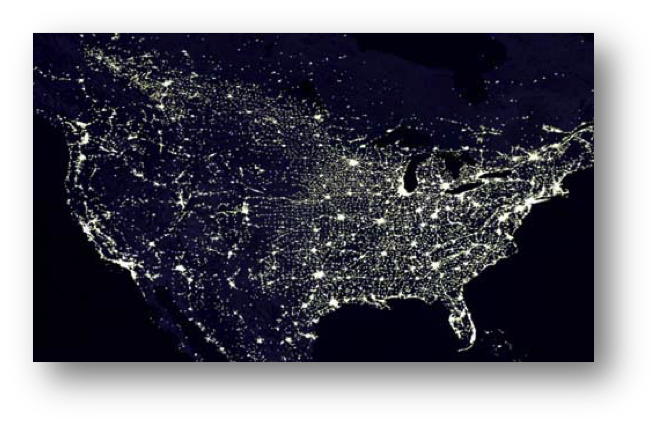
    For example: the Electric Coops. These Electric Coops utilize the power distribution infrastructure of large IOU (Investor Owned Utilities) or Generation & Transmission (G&T) companies like Western Farmers. The G&T’s actually work for the Electric Coops who tend to be small town or county based utility providers like East Kentucky Power or Tri-County Electric in Oklahoma. In Oklahoma there are 23 Electric Coops that Western Farmers (the State’s G&T) works to provide electrical generation and transmission capabilities. Essentially what this means is that the Utilities bring more to the table than the carriers. Ultimately the Utilities have connections to all the markets, especially the rural areas, and have corned that market by providing power, a National Asset, thus the inherent ability to provide broadband access to the entire population of the United States and our territories. Every house, building, tower and government building is tied into power and those power connections have fiber running along them.

    Figure <!–[if supportFields]> SEQ Figure \* ARABIC <![endif]–>1<!–[if supportFields]><![endif]–> – US Electric Grid Coverage
    For the last few years the electric grid has been going through some major upgrades; those upgrades require fiber and wireless broadband to sustain and build out the SMART Grid. In order to operate these electric grids with SMART Meters, which most of us now have, requires broadband connectivity. This means that everything that requires power has the potential for a broadband requirement, not just from the consumer of power, but the large IOUs and the G&Es as well. By making broadband Title II means that these electric grid players will now be able to compete in the broadband space by selling broadband as a bundled package to the consumer’s electric bills. Being that the grid build out is a business case in itself, the broadband connectivity is just a residual affect of the infrastructure required. What does this mean to the carriers?
    The carriers will have to compete with pricing associated with new players whose business model’s are not driven by providing broadband services, but rather the essential requirement for needing power. That means you and I can get cheap broadband service for a quarter of what the carriers would charge and we would have no limits on bandwidth if desired by the power market. To make things even worse for the carriers, these Utilities will combine the broadband fee into our utility bill every month, so we actually don’t have to see a separate broadband billing notice. To the Utility market, this added service model of broadband is pure revenue on top of a utility solution they were already providing anyway — so naturally a commercial carrier is nervous. But remember the carriers target population mass because their business model is based on broadband services itself – not power – which means they have to watch what they spend on deployments that detract from their revenue margins, thus never building out to the rural markets. The good thing is the carriers will now be able to enter the rural markets with little or no cash, but they will have to compete with a host of much cheaper players who also have the same access. It will be just a matter of time before these players start to penetrate the major metropolitan footholds of the carriers, thus the battle lines are being drawn.
    Carriers like Sprint and T-Mobile, who have struggled to get a foothold against AT&T and Verizon, are now understanding what Title II and Net Neutrality are bringing — equality and complete coverage without the added capital required. Recent press illustrates they are getting  behind the FCC’s and the Presidents plans.
    It’s not all doom and gloom for the commercial carriers though. What the commercial carriers bring over these smaller players is the quality associated with an accessible network of service options that the smaller players may struggle to bring to the table – at least for a little while. This means the carriers can continue down the road with shedding their physical assets and becoming more reliant upon virtual networks and/or cloud based service offerings to all consumers no matter where they are. Quality and depth of services will always win in the end. In essence the smaller guys will generate revenue by providing the broadband access as an additive utility offering; the carriers will bring the services on top of that established access.    
    If I were a carrier — I would be getting onboard with what is about to happen and save my energy and resources in setting up my new business model for the future. Consolidation is happening anyway, now we can just sit back and let the Feds force its finalization. If I were in the carriers construction unit, I would be looking for more stable ground with smaller more nimble firms who will be of great demand shortly. Somebody has to build out this entire infrastructure to the rural areas and I can safely state that it won’t be the overpriced carriers’.
    But whom and I other than….

    Just some guy and a blog…..

    Commonwealth of Kentucky and Macquarie use someone else’s Intellectual Property for a $300 Million dollar project?

    It seems that when you have a great idea it’s OK for a large State and Corporation to plunder from the Little Guy. This is exactly what is happening with the State of Kentucky and the Macquarie Group.
    As many of you are well aware, I’ve put a tremendous amount of time and energy in evangelizing about the Public Private Partnership model (now trademarked as the Myers Model™). My model was developed with over 25 years of experience and most specifically outlined within my publications for the last 10 years.  My model is also the only model that can fund the entire program of Broadband. Well, it seems there are those out in the market that believe they can capitalize on someone else’s ideas and claim them as their own.
    Now there are many of you who would think I would be very upset – well I am – but I chose a different tactic a long time ago. I’ve been prepared for this situation since day one of this venture. I figure there was going to be one of two paths in the road ahead: 1. A State taking a moral and ethical route of incorporating the ideas then developing them for their needs with proper compensation and accreditation, or; 2. Using the trade secrets and Intellectual Property of someone else then trying to pass it off as their own design even if its against Trade Secrets and Copyright — which by the way being that these Intellectual Property Rights are covered and protected under a Federal Administration and Legislation would make this a Federal Crime. I’m afraid the Governor of Kentucky may have been undermined by his own Staff who found it necessary to plagiarize the material I’ve been presenting to them since 2012 as the justification to augment an RFP for fiber broadband.
    Did anybody wonder why the State issued two RFPs for this project in 2014? The first one for the traditional taxpayer funded bond-grants procurement of a fiber optic network. The second, made in haste and a day later, was an RFP asking for a Private Investment entity to bid on the overall program as a Build Operate Transfer contract, of which Sterne Agee won. Then all of a sudden the first RFP states it will be a Public Private Partnership, which included the requirements from the second RFP. The fact is the only reason the State produced these two RFPs was because of the model and the solution I presented to them, over the course of the last two years, was the only viable way they could avoid the complication of further taxation.
    I do have one question though, if that’s the case why would the Finance Department Head, a Cabinet Level Appointee of the Governor, feel its necessary to spend the $30 Million in taxpayer money anyway? Seems odd to go with a bid that still has the taxpayer funding parts of the bid; when the alternative was no taxpayer money at all…doesn’t it? The reason being is that the State wants to spend the $30 Million of taxpayer money to maintain their own control.  There is only one problem… the State is partnering with a foreign company to which, being that they can’t use taxpayer money for investment purposes, means they have no way of a controlling interest. Only the investors will – a foreign company called Macquarie — which the State cannot be considered as an investor of taxpayer money. Now there is nothing against the Australians, actually you can’t ask for a better partner, but the Australians have even more stringent legal ramifications of protecting Intellectual Property than the US. It’s not totally against the law when a foreign company is holistically making the investment and funding its own operation. The issue is using taxpayer money for government funding, government right-of-ways, government frequencies, and essential Government run Public Safety Services, especially when it’s a protected National Asset. It may be just me but we may have a few sticky points to address, if not all together red flags… but who am I. But I digress…
    The secret to my chosen path is the exposure of my material. Since day one I could have tried to hide, and keep secret, my ideas and material, but what good would that be for just a simple American Citizen who doesn’t have the means to market nor protect such valuable materials, especially against such endowed giants within the industry. I am the definition of the “Little Guy”. I am a disadvantaged Veteran with Disability Owned Small Business of one employee — myself. With that in mind I chose an alternative plan. My plan is to use the politics and the exposure of social media and the open market of information as my protection – essentially hiding in plain site. Imagine all the witnesses you can call to court proceedings to vouch about your work. Imagine all the documentation that is readily available for the courts to digest in its ownership and property rights analysis. Imagine the dichotomy of intellectual and empirical works of knowledge associated with said works; let alone the only published dissertation on the topic in the entire Nation – if not the world. If you need to understand further, then let me recap on the use of Intellectual Property Laws.
    “Intellectual property (IP) is a legal term that refers to creations of the mind. Under intellectual property laws, owners of intellectual property are granted certain exclusive rights. Some common types of intellectual property rights (IPR) are copyright, patents, and industrial design rights; and the rights that protect trademarks, trade dress, and in some jurisdictions trade secrets. Intellectual property rights are themselves a form of property, called intangible property.” (Ref Wikipedia  http://en.wikipedia.org/wiki/Intellectual_Property_(film))
    “Typically, a work must meet minimal standards of originality in order to qualify for copyright, and the copyright expires after a set period of time (some jurisdictions may allow this to be extended). Different countries impose different tests, although generally the requirements are low; in the United Kingdom there has to be some ‘skill, labor, and judgment’ that has gone into it.[22] 
    Copyright law recognizes the right of an author based on whether the work actually is an original creation, rather than based on whether it is unique.” (See References below)
    The fact is, starting back in 2003, was when I first started scripting and developing this model and its application to the telecommunications market – thus the name “Advancing Telecom” for my business which became an official LLC in 2007. Given the nature and complexity of building broadband is why I chose this topic. But at the time it was focused on delivering broadband to all vertical industries, not just Public Safety. When FirstNet came along I kicked the model into gear and started talking about my idea to everyone of which it then caught fire.
    I had my first meeting, with my first State (Texas), in December of 2011, even before the Public Safety Broadband Network was ratified and created. I even solicited a proposal to the State for the Public Private Partnership model to build the State’s Public Safety Broadband Network prior to FirstNet. Texas law states that any Proposal to the State, in a Public Private Partnership fashion, the State has to consider its application and if the proposal creates more opportunity and income for the State and it’s taxpayers, above and beyond what the State can produce on its own, then the State has to adopt it. This was the basis for my initial meeting with the State in December of 2011. Believe me I am watching that submittal very closely.
    Following my presentation with the State I thought that the idea would be best applied if I opened it up to more potential users. It was then that I decided, using my own money and time, to present the model to multiple States. My plan was a multi-prong approach of social media (my blog – which has almost 50K followers and readers), attending conference, State meetings and presentations, as well authoring a book and more than 280 articles and publications. I even capitalized on a paid consulting assignment to develop the model for the Electric Cooperatives in Oklahoma, which was a great success.
    Since that original roadshow I’ve now met with more than 30+ States and have presented the material to all of them, whether through their appointed SWICs, State CIOs, DHS, Rural Electric Coops, Investor Owned Utilities, Governors, or Lt Governors and of course my attending an assortment of conferences. In one conference alone, hosted by the State of Ohio, I had twelve States show up in one meeting. I’ve also presented the material, and spoken with, the leadership of the FirstNet Board and the FirstNet organization on a number of occasions – to include people within the Department of Commerce, the NTIA and DHS directly.
    The point I’m making is that I’ve been tied to this material for a long time. The only reason the State of Kentucky, and the Macquarie Group, are touting “Public Private Partnership” and “it’s something that’s never been done before” and “it’s the first time of inviting Private Equity into such a mix” is all based on my direct Intellectual Property…. plain and simple. I ask this; why is it that a State like Kentucky and a large multi-billion dollar corporation like Macquarie find it necessary to take out the Little Guy in the deal other than insatiability?
    My licensing fees and equity stake are trivial to the overall funding of the program and revenue creation. Why risk a $300+ Million dollar program by plagiarizing someone else’s Intellectual Property? To me that’s like getting 20 years in the slammer for stealing a .50 cent candy bar. Was it worth it? Why put the taxpayers in such a position? It takes a lot of guts for someone to put the State’s plan in jeopardy, let alone their own career, the ethical reputation of a standing Governor, and the entire character of the entire State Government for such a small gesture.
    The State’s program is at risk of being delayed in the courts, of which, only taxpayers are the ones to lose in the end — yet again. Is it worth it? How do you think the Grand Jury will look at these two large organizations trying to conquer this lonely Little Guy — let alone a Veteran with Disability Owned Small Business — who is just trying to make an honest living? A lot of people don’t realize that in an Intellectual Property dispute the risk is that the Intellectual Property Holder could end up owning the entire program if the Jury decides in his favor. Penalties alone run a minimum of 25% of the total value in the program, let alone the entire programs revenue stream would be diverted to the Intellectual Property Holder. Plus, don’t forget such actions are open to Federal Prosecution, so someone may end up going to Federal Prison for it. Is it worth it?
    It really is that simple…. is it worth it?
    My suggestion, settle the issue before things get out of hand. But then again who am I other than….
    Just some guy and a blog….


    1.      Copyright, University of California, 2014, retrieved 2014-12-15
    2.     17 U.S.C. § 106, United States of America, 2011, retrieved 2014-12-15
    3.     Article I, Section 8, Clause 8 of the United States Constitution
    4.     “International Copyright Law Survey”. Mincov Law Corporation.
    5.     Boyle, James (1996). Shamans, Software and Spleens: Law and the Construction of the Information Society. Harvard University Press. p. 142.ISBN 0-674-80522-4.
    6.     Copyright in Historical Perspective, p. 136-137, Patterson, 1968, Vanderbilt Univ. Press
    7.     “Statute of Anne”. Copyrighthistory.com. Retrieved 2012-06-08.
    8.     Bettig, Ronald V. (1996). Copyrighting Culture: The Political Economy of Intellectual Property. Westview Press. p. 9–17. ISBN 0-8133-1385-6.
    9.     Ronan, Deazley (2006). Rethinking copyright: history, theory, language. Edward Elgar Publishing. p. 13. ISBN 978-1-84542-282-0.
    10.   Pelanda, Brian. Declarations of Cultural Independence: The Nationalistic Imperative Behind the Passage of Early American Copyright Laws, 1783–1787 58 Journal of the Copyright Society of the U.S.A. 431 (2011).
    11.   About Stephan Kinsella  (174 Posts) (2011-12-01). “Thomas Jefferson’s Proposal to Limit the Length of Patent and Copyright in the Bill of Rights”. Libertarianstandard.com. Retrieved 2012-06-08.
    12.   “Berne Convention for the Protection of Literary and Artistic Works Article 5”. World Intellectual Property Organization. Retrieved 2011-11-18.
    13.   Garfinkle, Ann M; Fries, Janet; Lopez, Daniel; Possessky, Laura (1997). “Art conservation and the legal obligation to preserve artistic intent”. JAIC 36 (2): 165–179.
    14.   International Copyright Relations of the United States“, U.S. Copyright Office Circular No. 38a, August 2003.
    15.   Parties to the Geneva Act of the Universal Copyright Convention[dead link]as of 2000-01-01: the dates given in the document are dates of ratification, not dates of coming into force. The Geneva Act came into force on September 16, 1955, for the first twelve to have ratified (which included four non-members of the Berne Union as required by Art. 9.1), or three months after ratification for other countries.
    17.   MacQueen, Hector L; Charlotte Waelde and Graeme T Laurie (2007).Contemporary Intellectual Property: Law and Policy. Oxford University Press. p. 39. ISBN 978-0-19-926339-4.
    18.   Peter K, Yu (2007). Intellectual Property and Information Wealth: Copyright and related rights. Greenwood Publishing Group. p. 346.ISBN 978-0-275-98883-8.
    19.   World Intellectual Property Organization. “Understanding Copyright and Related Rights” (PDF). WIPO. p. 8. Retrieved August 2008.
    20.   Simon, Stokes (2001). Art and copyright. Hart Publishing. pp. 48–49.ISBN 978-1-84113-225-9.
    22.   Express Newspaper Plc v News (UK) Plc, F.S.R. 36 (1991)
    23.   17 U.S.C. § 201(b); Cmty. for Creative Non-Violence v. Reid, 490 U.S. 730 (1989)
    24.   Copyright Act of 1976, Pub.L. 94–553, 90 Stat. 2541, § 401(a) (October 19, 1976)
    25.   The Berne Convention Implementation Act of 1988 (BCIA), Pub.L. 100–568, 102 Stat. 2853, 2857. One of the changes introduced by the BCIA was to section 401, which governs copyright notices on published copies, specifying that notices “may be placed on” such copies; prior to the BCIA, the statute read that notices “shall be placed on all” such copies. An analogous change was made in section 402, dealing with copyright notices on phonorecords.
    26.   “U.S. Copyright Office – Information Circular” (PDF). Retrieved 2012-07-07.
    28.    Copyright in General – “I’ve heard about a ‘poor man’s copyright.’ What is it?”, U.S Copyright Office
    29.    “Copyright Registers”, United Kingdom Intellectual Property Office
    30.    “Automatic right”, United Kingdom Intellectual Property Office
    31.    Peter K, Yu (2007). Intellectual Property and Information Wealth: Copyright and related rights. Greenwood Publishing Group. p. 346. ISBN 978-0-275-98883-8.
    32.    Tom G. Palmer, “Are Patents and Copyrights Morally Justified?” Accessed February 5, 2013.
    34.    “US CODE: Title 17,107. Limitations on exclusive rights: Fair use”. .law.cornell.edu. 2009-05-20. Retrieved 2009-06-16.
    37.   ^ Jump up to:a b WIPO Guide on the Licensing of Copyright and Related Rights. World Intellectual Property Organization. 2004. p. 15. ISBN 978-92-805-1271-7.
    38.    WIPO Guide on the Licensing of Copyright and Related Rights. World Intellectual Property Organization. 2004. p. 8. ISBN 978-92-805-1271-7.
    39.    WIPO Guide on the Licensing of Copyright and Related Rights. World Intellectual Property Organization. 2004. p. 16. ISBN 978-92-805-1271-7.
    40.   ^ Jump up to:a b Creative Commons Website http://creativecommons.org/ retrieved October 24, 2011.
    41.   ^ Jump up to:a b Rubin, R. E. (2010) ‘Foundations of Library and Information Science: Third Edition’, Neal-Schuman Publishers, Inc., New York, p. 341
    42.    17 U.S.C. § 305
    43.    The Duration of Copyright and Rights in Performances Regulations 1995, part II, Amendments of the UK Copyright, Designs and Patents Act 1988
    44.    Nimmer, David (2003). Copyright: Sacred Text, Technology, and the DMCA. Kluwer Law International. p. 63. ISBN 978-90-411-8876-2.OCLC 50606064.
    46.    See Peter B. Hirtle, “Copyright Term and the Public Domain in the United States 1 January 2014” online at footnote 8
    47.    Lawrence Lessig, Copyright’s First Amendment, 48 UCLA L. Rev. 1057, 1065 (2001)
    48.    “Stanford Center for Internet and Society”. Web.archive.org. Archived fromthe original on 2006-10-27. Retrieved 2010-05-08.
    49.    Owen, L. (2001). “Piracy”. Learned Publishing 14: 67–70.doi:10.1087/09531510125100313. edit
    50.    Butler, S. Piracy Losses “Billboard” 199(36)
    52.    Tobias Kretschmer & Christian Peukert (2014). [Abstract PDF “Video Killed the Radio Star? Online Music Videos and Digital Music Sales”]. Social Science Electronic Publishing. ISSN 2042-2695.
    FirstNet has to rebuild the Trust between the States and the Federal Government..may have put the nail in the coffin of the "Opt In" scenario.

    Ouch! Have you read the latest article about FirstNet in the New York Times?
    “Unfortunately, the inspector general’s report confirms what we have suspected and long feared — that FirstNet had been operating without proper processes and with disregard for laws that guard against impropriety,” Mr. Walden said in a statement. “Questions of ethics threaten the legitimacy of FirstNet’s efforts and ultimately undermine its important mission to build a nationwide public safety broadband network.” (New York Times)
    Here I thought the daytime drama show “As the World Turns” had vacated the scene only to find out it has a life and is still making in roads in Reality TV. Next we will find out if it was his evil twin brother that actually committed the crime and had an affair with his brother’s mistress. Good thing that Chief Fitzgerald doesn’t eat Quiche, nor like to watch daytime dramas. 
    As I stated in a much earlier post entitled How do you hide a 400-page FirstNet business plan with no one finding out? Any suggestions? someone is going to jail over this. It’s very unfortunate that one’s personal ambition, and the sin of greed, can cloud the judgment of the honorable man – or was it un-honorable man? I’m confused. My only question is what happens to the lobbyist that were encouraging and supporting the crime? After all Sam Ginn could not have done this alone — if it were Sam Ginn. The fact is such behavior has now destroyed the trust between the States and the Federal Government.
    If times were different then this may have been just another short-lived news story, but given the nature of today’s political scene, and the history of other failed Federal technology initiatives, this will linger for sometime like a bad stench of spoiled milk in the refrigerator. Regardless, this is water under the bridge and the process of the investigation is in someone else’s hands now. Thank goodness that Sue Swenson is doing a good job in turning this all around.
    Unfortunately all this wasted time and effort has forced Chairwoman Swenson to take a few steps back. The struggle to rebuild the trust between the States and the Federal Government has to be repaired else the “FirstNet” plan will fail. That doesn’t mean the Public Safety Broadband Initiative will fail, in contrary, there is a silver lining to all this. The situation that FirstNet is in will help guide those States that were going to Opt-In with the epiphany of Opt Out.
    A lot of people think that the State’s can’t do this on their own, but in reality the opposite is in fact the case. It is the Federal Government who can’t do this without the States. A State can initiate its own Public Private Partnership (P3) to build its own Public Safety Broadband Network, even with the standards and approved vendors laid-out by the PSCR.  The truth be told that the success of this whole nationwide technical solution is dependent upon a small piece of silicate.
    Yes, a piece of silicon is all that connects total interoperability between all the State deployed Public Safety Broadband Networks – that being the Band-14 Chip — no bigger than the end of your finger tip and thinner than the tip of a pencil.  This means we can put this small chip into my refrigerator and it can be totally interoperable part of the Public Safety Broadband Network. The point I’m trying to make is that this network is not as complex as the unknowing realize.
    In the end we must remember that the FirstNet mission is a totally separate program from the State initiated P3, or Opt Out scenario, as it pertains to governance and control. As I have written about in earlier articles, tactically the technical solution will remain the same. When FirstNet gets its mission back online then they can start to incorporate all the State solutions into one homogenous solution. Come to think of it, Sam Ginn may have done FirstNet a favor in that regard. Imagine not being burdened with the necessity to build the network and passing those risks onto the States to build it for them…and it’s still totally interoperable? Ingenious!
    But who am I other than…
    Just some guy and a blog….

    FirstNet – "Opt Out" means you choose a Capitalistic Approach, rather than a "Nationalistic Approach" to building the Public Safety Broadband Network.

    My-oh-my the web we weave. Just read the following articled entitled “FirstNet: Is Opting Out an Option? Myriad factors and unknowns cloud the question for now” by
    Adam Stone, Emergency Management on November 17, 2014.
    The first thing that came to mind about this article was the lack of substance behind the negativity of an “Opt Out” solution — a solution that actually makes sense –especially in the absence of an alternative. As has been the case since the beginning – you show me yours and I will show you mine! In fact the “Opt Out” solution has been shown, presented, answered and quantified on many occasions with many different entities, State Governors, Legislatures and Public Safety Officials, and via a Public Private Partnership model. The only reason we are talking about this topic is because the alternative is either non-existent, toxic, or secretly bestowed upon only a select few for the benefit of a “nationalistic approach” where as their solution becomes very profitable option for the Federal Government and its overreaching control of the States assets – especially if classified as a Title II Utility.
    Everyone hears the topic “Opt Out”, and then “he or she” hears about the need for the State to let the Federal Government come in and fund and build the solution “for free”.  Then we are told that “we” should avoid the topic of “Opt Out” all together by allowing this nice big brother to come in and just do it for you – which reminds me of myself when I was young.
    As a self-centered little juvenile I used to instruct my little brother that the small lollipop tastes so much better than the big one and that I will take on the burden of eating the gross lollipop by allowing him to eat the much tastier one. As you may have imagined I made out pretty well on the back of my brothers hard efforts in collecting Halloween candy.
    What this argument fails to disclose is that, yes, the State would be responsible for its own build, but doing so with a Public Private Partnership means private investment will actually come in, pay for the entire build, its deployment and operate it long-term — and prioritized for Public Safety! In fact the State just takes an ownership position then collects revenue from the P3 and Public Safety gets Free service. What’s so bad about this idea? After all isn’t that what the Nationalistic Approach would do, but only reap the benefits for themselves on a much more unrealistic scale? Where would they get the money to fund their solution? Who will build it for them? Who will run it? I can guarantee you it won’t be any State Governor. So, let me get this straight, I could have told my little brother that the smaller lollipop is so much better than the big one, then take ownership of all his lollipops, while at the same time still making him go out and collect all the candy? That would have sounded pretty good for such a self-centered older brother.  But, then it was just candy.
    The reason is simple; the “FirstNet Nationalistic Solution” entitles this one organization, under the control of a select few, to monetize the use of the spectrum for their own vision of what the States need. Plus, it doesn’t hurt that they will take in all the profit for their own needs, while at the same still masking the need for the State to help fund it and build it anyway. Is it just me, or does something sound a little coercive and unethical about such behavior? Do we really think the Feds are going to come in and fund the deployment of FirstNet without hitting both the Federal tax base as well as the State tax base? Just because the carrier interest has been effectively undermined, doesn’t mean they have gone away. Ever hear of a wolf in sheep’s clothing? In this case we have the epitome of greed through an image of Satan dressed up in a sheepskin.
    The fact is a Nationalistic Approach offers the chance for the State to supposedly get a network “for Free”, but it fails to disclose what the Feds gain in return. The return is the control and profitability of the valuable spectrum that should be specifically addressing a State’s own needs by monetizing the spectrum, and its revenue, to help improve “the State’s” economic concerns, employment outlook, and taxation relief under a State’s own control. Do we actually believe that a Nationalistic Approach to this, from the top down, will be in the best interest of the State, it’s citizens and its direct needs for Public Safety? Remember a majority of the emergency response solutions are local, so why have a Nationalistic Solution to a local problem? What part of the nationalistic approach addresses the tax relief part of the Tax Relief Act?
    Having spent more than 25 years in the telecom industry, I can safely state that there has never been a network of this size and complexity created from a top-down approach. In context, if a network has to be created from the bottom-up, then why wouldn’t we start with a small design, in a select geography, that is created within the boundaries of one State? Does that not make sense – especially when it has so many efficiencies for its deployment needs, as well as its direct benefits for the State? Does this not bleed of alignment with the Middle Class Jobs Creation Act of 2012? If you’ve ever played fifty-two-card pickup, then you know you can’t pick up all fifty-two cards at once. You must pick them up one at a time.
    The term “Opt Out” is not just a simple message of “a State will build its own network”. The term “Opt Out” means a State “Opts Out” of the Nationalistic Model, which will be the demise of the approach? If the Federal Government wants to declare telecommunications as a “Utility” within “Net Neutrality” then this nationalist approach would be the starting point to creating that overarching entity. Plus, as I have stated in the beginning of this article, FirstNet has no sustainable business model…it’s that simple. I have promoted a single business model, that I developed over ten years of research, which makes sense – that being The Myers Model® Public Private Partnership. 

    What does Public and Private Partnership mean, as rush Limbaugh can attest, its a choice. Who do you want designing, building, operating and maintaining your Public Safety Broadband Network — the “Public” government?; Or, you and me the “Private” people? 
    In the end the question is quite simple; “Governor, are you going to select a nationalistic solution or are you going to select your capitalistic approach? One solution gives benefit to the Federal Government and the other to your State.”
    But who am I am I other than….
    Just some guy and a blog…

    The FCC, and the President, just did AT&T a huge favor! The answer to Net Neutrality is in the FirstNet mission.

    With AT&T ceasing work the real message to the FCC, and President Obama, is the willingness of AT&T to hang their TURF contractors out over the cliff as a threaten to ruin an already fragile market. By doing so AT&T is threatening the President, and the FCC, with mass extermination of the already struggling contractors who are constantly squeezed like a lemon until an explosion of bankruptcy prevails. This isn’t the first time AT&T has had the market on eggshells, every time AT&T sneezes these small players face drastic measures of cutting staff. Most of these smaller firms are “hire-and-fire” companies as it is, which hasn’t helped the hiring process at all, but this may put a nail in the coffin for the entire market. But maybe AT&T didn’t think this all the way through, or maybe they did? By delaying their own plans to expand and capture more market, they may in fact be destroying the market for certain silos within their own company, which has been the intention all along.
    If AT&T were already consolidating and stripping silos, that are detrimental to the bottom line, the most burdensome area to focus on would be the enterprise or fiber business. As I wrote about in the past, the only real piece of the physical architecture that is amenable to Net Neutrality is Layers 1 and 2 – that being the fiber, conduits, right-of-ways, etc.. The content and services layers, Layer 3 and above, are to fluid in their demand to meet market needs and are unmanageable in the context of Net Neutrality, multiply that by the number of providers and you will quickly see the useless advantage of trying to manage access and services in an equitable fashion. The focus of Net Neutrality lies in Layer 1 and 2, not the services layers of Layer 3 and above. This is why an Attorney, or a President, is not equipped to intervene in such a market; you must be abreast of what the Layers are within the telecommunications space. I don’t see too many network engineers struggling to change Tort Reform, why should we see Attorneys struggling with TCP, UDP or NAT services? It’s all about the money that’s why.
    With that said, who is really suffering? If I were AT&T and I needed to shed the burdensome silos, which are severely detracting from my bottom line, what better way in making a needed drastic change than under the disguise of government intervention. Let the government come in and take over the fiber networks, for a fee of course, then I am free and clear to shed and consolidate my resources and re-shape the company towards the more profitable Content Services market, which is really where I want to go anyway. So in fact, President Obama just did AT&T a huge favor by giving them reason to eliminate the contractors who support their Layer 1 and 2 deployments. You should note that these contractors are encumbered with unions, so it’s not all bad.
    In the end though, all the small contractors will suffer the most — which means you and I. AT&T gets cover and a real reason to morph its business into the much more profitable Content and Services space. And, the government gets what it was asking for — burdened with the cumbersome, costly fiber infrastructures, and a legal conundrum of drastic changes to unionization.
    There is an answer though. The only way out of this mess is for the Government to leave the commercial assets alone; establish their own fiber infrastructure; and then allow Net Neutrality to happen on their own infrastructure. It may be just me but anybody else smell the stench of more taxpayer funding and a new overreaching government agency? The answer may lay with FirstNet.
    FirstNet, and its requirements to build a nationwide broadband network in support of priority public safety usage, requires vast amounts of fiber transport and fixed microwave. If there is any asset that has the best chance of reutilization within the FirstNet deployment, it’s Fiber and Microwave. These technologies make up the Layer 1 and 2 infrastructure of the Public Safety Broadband Network. Being that the target coverage for FirstNet is 100% makes all available assets in this space attractive for repurposing to a nationwide architecture. As I have spoken about in the past, the only real business model to successfully implement such a broadband solution, that doesn’t cost the taxpayers anything, is through a Public Private Partnership – The Myers Model® in fact.
    FirstNet needs fiber and the FCC wants to grant Net Neutrality – seems like a marriage made in heaven.
    But who am I other than….

    Just some guy and a blog….

    FirstNet — Obama Tries to Design a Broadband Network and puts the FCC on the Hot Seat to Answer Net Neutrality and Broadband to all Americans — the Answer lies within the Public Safety Broadband initiative!

    [“Net neutrality” has been built into the fabric of the Internet since its creation — but it is also a principle that we cannot take for granted. We cannot allow Internet service providers (ISPs) to restrict the best access or to pick winners and losers in the online marketplace for services and ideas. That is why today, I am asking the Federal Communications Commission (FCC) to answer the call of almost 4 million public comments, and implement the strongest possible rules to protect net neutrality.]
    This is what happens when Attorneys want to design a broadband network. Before this can of worms gets opened allow me to explain something. The “Internet” is made of many layers. The first and second layers are basically the right-of-ways, the spectrum, the conduits and the networking equipment to power the “transport” network of broadband communications.  Essentially these two layers make up the physical infrastructure of assets. In the past, for the carriers to make money, they were forced to put money into these two layers so that they can provide “services” at layer 3 and above.  We can’t afford to get the “physical infrastructure” mixed up with the definition of “broadband content services and access”.
    What really needs to happen here is the physical infrastructure (layers 1 and 2) needs to be classified as a Title II Utility, but the broadband services (layers 3 and above), which ride on top of the physical infrastructure, should stay in the open market.
    If an “Internet Service Provider”, or video-streaming provider (Netflix, Blockbuster), wants to sell access to their content then why would we try to classify them as a Utility? These streaming companies aren’t in the business of access; they’re in the business of content. This is why you see AT&T delivering Uverse. UVerse allows AT&T to move into the content space, which is in direct competition with those streaming companies. The issue AT&T has is its own internal organization framework. AT&Ts organization is big, cumbersome and made up of many silos, some of those silos are still investing in upgrades to an infrastructure in support of the “old” commodities approach. Internally there are competing product silos that are trying to move away from physical access needs, while at the same time the corporate office are trying to commit to pure content delivery – which by the way is much more profitable than the traditional commoditized “Internet Access” model. To add, these new product offerings puts AT&T into a content market that is being dominated by much smaller niche players who are much more nimble, can react, and foster more focused creativity than the giant telecoms.
    If AT&T can’t afford, or don’t want to play, in the access model delivered through the commoditized assets of layer 1 and 2, then are we basically saying that AT&T and Verizon are going to be a Utility?  Although this could be very lucrative, and there may be some entrepreneurs in the carrier space that wouldn’t mind the longevity and stability of this model, the case analysis demonstrates that it won’t be the best fit for these telecom giants. It’s too hard to change a horseshoe on a galloping horse in mid-stride during a terrestrial downpour in a field full of deep mud.  These organizations would have to expend large amounts of capital to make the change, to which has no guarantee it will even work when completed – if its ever completed.  Afraid to say but the future of the carriers will be limited to cost cutting measures and the stripping of silos that don’t match where the leadership wants to go. That means a LOT of layoffs are inevitable. Why is that?
    As you can imagine the cost to build and maintain layers 1 and 2 are increasing the pressure on the traditional broadband services model where as the commercial carriers see the need to move away from owning the physical assets in layer 1 and 2 and moving to a pure layer 3 content and above play. This means a dramatic decrease in the overheads from their bottom lines and a dramatic increase in profit margins. But trying to get a large ship to change the course in a shallow pond will be suicide? If you sell broadband service to a consumer with a smart phone, then the overhead the carriers traditional must carry is roughly 70% of its profit margin. In short, I sell you a $40 dollar a month “all-you-can-eat” plan and I have to give  $28 away just to pay for my physical assets – and those costs continue to rise — especially when the carriers are being monopolized into building out to the rural areas where the cost justification of putting more money into the infrastructure doesn’t make sense.
    Another hot topic is that the access model of old has been commoditized into stagnation and the cost of providing the infrastructure to support that commoditization doesn’t help.  The commoditization of the access opened the door to smaller, more nimble, broadband companies who only sell the broadband content that adapted to the broadband infrastructure that exists today. This is why the commercial carriers (AT&T, Verizon, etc..) are putting pressure on the streaming content providers to pay more for access.  
    It’s just bad timing. The timing associated with expanding broadband to all Americans is forcing the issue of change onto the carriers, faster than they anticipated. A majority of the carriers are eliminating old architecture daily and are opting to sell assets to whoever wants it – as long as they get exclusive rights to that infrastructure. This means the carriers want to monopolize the access model for their own content – at least initially.  Title II puts kinks in that plan though — or does it? Look at the glass half-full in this case. By moving away from the notion of trying to monopolize their content delivery why not just let the assets go? Eliminate a lot of infrastructure, quickly, and move into more profitable content while at the same time eliminating deadweight draining blood from the bottom-line– just a thought.
    The main course has already been established though. You are either at the table or you’re on the menu. There is one thing that is not being mentioned – FirstNet and the Public Safety Broadband Network.
    Signed into law on February 22, 2012, the Middle Class Tax Relief and Job Creation Act created the First Responder Network Authority (FirstNet). The law gives FirstNet the mission to build, operate and maintain the first high-speed, nationwide wireless broadband network dedicated to public safety. FirstNet will provide a single interoperable platform for emergency and daily public safety data communications.
    Why is FirstNet, or the Public Safety Broadband Network, so important? Well, because it’s the perfect catalyst to build one homogenous infrastructure of broadband fiber and wireless assets. By partnering within a prioritized scheme of users, where as Public Safety is priority 1, they will be a great opportunity to put money into the infrastructure of assets that the President is calling a “Utility”. The premise of FirstNet is to build a nationwide broadband network of fiber and radio access networks, the same architecture the carriers are trying to shed.
    No, we can’t just buy the carriers assets to make it our own. What we can do is establish a framework for collecting land, right-of-ways and the spectrum to build a truly hardened, protected and cyber-secured infrastructure that enables all layers of prioritized access and usage schemes – to include commercial broadband access to all Americans and the ointment to the “Net Neutrality” rash. This new National Asset will form the baseline for the communications framework of the nation. Work has already commenced on this front. Why not consider the infrastructure needs of FirstNet as the basis for creating a Public Private Partnership between government requirements and private industry needs for a holistic access model? Sounds like a great solution that knocks out multiple birds with one stone. There is one model that was designed for just this purpose….The Myers Model®.
    But then who am I other than….
    Just some guy and a blog….

    FirstNet — Public Safety Community! Never bite the hand that feeds you!

    Everyone has heard the term “don’t bite the hand that feeds you”, well this may be the epitome of such a K-9 expletive. But, it’s been along time coming and finally we are getting somewhere. Addressing a recent article entitled, “Public-safety groups disagree on ‘public-safety entity’ definition, including utility usage of FirstNet”, dated Nov 6, 2014, by Donny Jackson of Urgent Communications.
    “An electric utility, or any equivalent entity, does not fall within the definition of public-safety entity,” the APCO filing states. “Any conclusion to the contrary would be a plainly wrong reading of the Act’s provisions, and a stark departure from Congress’s intent to create a dedicated network for first responders.
    “If Congress intended a broad definition of the kinds of entities that would be considered ‘public-safety entities,’ it certainly could have mentioned groups like utilities, highway departments, or building inspectors, etc., rather than reference existing statutes with language like ‘sole or principal purpose of which is to protect the safety of life, health or property’ and ‘emergency-response providers.’
    What does “Public Safety Entity” mean? This question seems to be the topic of the day. I think a lot of people are confusing the term “Public Safety Entity” with “Priority Access”. There are a couple of things that one needs to consider.
    The Public Safety Broadband Network (PSBN) is just a broadband network — a broadband network running LTE as its RAN (Radio Access Network). In actuality the PSBN network is the exact same type of network and technology that runs our smart phones today. No we don’t want the carriers to run this network! The only difference between deploying this solution from a carrier deployed solution is the frequencies that FirstNet will operate on — plus a lot more hardening, protection, coverage area and its user base.
    With the term “Public Safety Entity” it’s easy to see how one can envision some Fire Station or Police Station somewhere, but in reality anybody that performs some type of protection, life saving or intercession during an emergency is really considered a “Public Safety Entity” – such as Police, Fire, EMS, Utilities, Transportation and the likes. There is an issue when defining the “Public Safety Entity”.
    When we try to define a “Public Safety Entity” it’s natural to think in terms of prioritization, this is where we need to focus in order to solve this problem. Defining “Priority Access” is not the same thing as just defining a “Public Safety Entity”. To define Priority Access we need to know the normal operational procedures and those procedures that are adhoc during a disaster from any and all entities that partake. From that analysis we can then allocate entities to certain pools of “customers/users”.
    The broadband technology we have today; the fact that we are just now defining mobility; and the creative associated with new applications yet to be envisioned; the initial rollout of this network will be under utilized. We must consider these characteristics when defining priority access. During normal operations the justification is more specific to meeting the needs of a business model so we can fulfill self-sustainment and funding obligations. Defining priority access during an emergency is all about who needs to get there first, what must they do when they get there, and how should they support the bigger disaster situation at hand. To think you can fund, design, build, and operate a network based on just one of these defining processes will not suffice.  There is not enough revenue to “self-sustain” either solution separately. You need both.
    In essence, when defining a “Public Safety Entity” you must first define a customer’s/user’s needs then define the technical Quality of Service (QOS) they will be assigned during times of normal operations and times during a disaster. It’s really that simple. If you are a Police, Fire or EMS entity then you will get priority 1 all the time. If you are a Utility you will get Priority 2 during normal operations and then, based on need, you will be provisioned Priority 1 as required. Most of the time this can be defined ahead of time and automatically applied when the incident commander takes charge – that’s part of the beauty of LTE.
    Getting back to the “not enough revenue to sustain” comment – I want to discuss the term “Normal Operation”. As each entity is defined into their respective priority groups, Priority 1 group is First Responders; Priority 2 group is Governor defined service support organizations, i.e. Utilities, Transportation and the likes, we can concentrate on making the solution viable and sustainable for the long-term (there is also a Priority 3 group but we won’t talk about that just yet).   Priority 1 users need to realize the importance of Priority 2-3 users. This network will not be possible without the support and the user-base that these groups bring. Without their incorporation into the solution then Priority 1 users won’t have enough cash to make it work.
    The spectrum is allocated to Public Safety, that’s why they’re defined as Priority 1, but those Priority 1 users mustn’t believe that they can design, build, operate and maintain such a complex platform of communications on their own. Let alone the cost impact on those organizations to equip their overheads with the talent needed. The fact is this broadband solution will redefine any organization as a telecommunications player that will compete with its overall mission of saving lives. We’re not talking about a 5-10 site LMR network; we’re talking about thousands of towers, backhauls solutions, fiber transport initiatives and hundreds, if not thousands, of provisioned services. Just the resources alone will blow away any OPEX budget on any Federally or State provided budget for Public Safety.
    If AT&T spends $30 Billion in two years to do an upgrade what do you think FirstNet will require? AT&T only covers 42% of the geographic landmass. How many resources do you think AT&T employs just to make their own private network work? For a Public Safety organization to think they can do it on their own will only delay the inevitable. We must have cooperation between all three Priority Groups of users so that we can create a broadband company that mimics the requirements of commercial carriers, yet stays private in nature and purely focused on the broadband needs of the Priority Groups.
    In closing, the technology can decipher, isolate and prioritize the traffic anyway we want and on any given situation. The governance will establish the framework for the prioritization of users in both normal situations and during disasters. Given the size and the complexity of the required broadband solution, it is inconceivable to think that “Public Safety Entities” can do it alone – it has to be a partnership between Priority 1, Priority 2 and Priority 3 requirements. Thus, in defining the term “Public Safety Entity” we need, we require, that the term stay “broad” in nature, and yes, we must always remember who the Priority 1 users are. Nobody “owns” this network. The network is being built as a national asset in support of prioritizing Public Safety first under one homogenous broadband communications platform. If anybody physically “owns” this network it would be at the State level. FirstNet will govern the national asset from the Federal level in support of Public Safety in general and for the State’s needs. Public Safety doesn’t exist otherwise.

    To put things in perspective though, as I have stated in the past, its just an LTE network. Technically we can design it anyway we want, but who gets access, and what priority they fall in, has to come from the State Governor. That is where they project team will sit when designing, building and implementing the State’s portion of the network, so this is where our focus should be. 

    But then again I’m…

    Just some guy and a blog….

    FirstNet — LA-RICS continues to use taxpayer money for a solution as to whether the chicken or the egg came first. Motorola continues to buy in.

    Just read the update on LA-RICs entitled “LA-RICS helped by 700 MHz narrowband order, set to begin LTE network deployment next week.” (Oct 28, 2014 Donny Jackson | Urgent Communications) and truth is there were no surprises. The fact that the LMR solution has moved forward, and the LTE solution has not, only illustrates the imbalance of the business model, the needs of its users, and the false path of believing that “if you build it they will come approach” does not apply to a very complex broadband program. The reality is that Mr Mallon and Chairman Fujioka need not spend any of the bonds or grants on physically building the broadband LTE network, plus there is a better way to attract the “cities” that will not commit. As I have stated in earlier articles, the approach that Mr Mallon is taking is not the correct one. I don’t say this to embarrass anyone; rather I say this to help the State out in that it really needs this Public Safety solution. Whether you like my comments, or not, reality really stinks sometimes – a reality this messenger did not create.
    The course the LA-RICS program is committed too will be tied up in the “chicken or the egg” scenario for sometime unless they take a different approach — an approach that I have pitched on many occasions. By the way we’re one year into the 2-3 years I said we would be tied down in a quagmire before a new course has to be set – that means another 1-2 years to go unless the light comes on. The issue is, and will always be, the balance between user requirements, user needs, private investments and the ownership. Until someone really takes a look into that aspect of the LA-RICS program, we will continue to funnel cash down a dark hole. Designing and building the solution is the sexy and easy part. Building a complex broadband network without a business plan is like building the Space Station without any instructions. But then again Men don’t need any stupid instructions. We get there when we get there. 😉
    Here is another interesting point. The article mentions Motorola as the contractor for the LA-RICS program. It’s understandable that there are those that really like Motorola and have relied upon them in the past for “LMR” based Public Safety solutions – after all, it’s just a tower and some radios – we can do that – right? Have you noticed though that every “LTE” broadband initiative awarded to Motorola has taken a downward spiral or went into stalemate? It’s just an observation but BayRICS, Harris County and a few others have all come to the same question – why do we have a vendor leading the effort when private investment is actually required? The fact is, not only is Motorola burning cash in these pursuits, but the State agencies that continue to encourage their efforts are as well. Having a solid long-standing relationship, and using that relationship to “implement the real solution, the solution that nobody else really understands because they don’t do what we do” may not be the best approach. If this were a scoreboard then Motorola’s efforts are not doing very well; neither are the State representatives that keep pushing a solution that does not engage the open market. 
    Motorola needs to ask itself if it’s in the best interest of Motorola to continue such pursuits when the company is spending more cash than revenue they are generating on the effort. I don’t know too many private, or commercial, companies that have survived on such a model. The State Governor’s need to step in as well. Why is it we have to continue spending taxpayer money for such a poor record of success? Had the LA-RICs program adopted the Public Private Partnership approach from the start, we would not be in a scenario where we are comparing the reproductive cycle of chickens and eggs.
    But then again I’m….
    Just some guy and a blog….

    FirstNet — Life’s like a box of chocolates….you never know what your going to get inside!

    Just read the following article written by Andrew Seybold on Urgent Communications entitled, “Partnerships are much more than contracts—an important distinction for FirstNet” . I agree with Andy about the need for Public Private Partnership, but one thing needs to be stated. 
    A P3 (Public Private Partnership) is not about a partnership between the government, the users, the vendors and the contractors. Take a look at The Myers Model® to see what makes up the P3. It’s all about a partnership between the government and private investors.
    With Mr. Seybold’s theory it would be a lot like a box of chocolates…you never know what you’re going to get inside.
    That’s all I got to say about that.
    Just some guy and a blog….